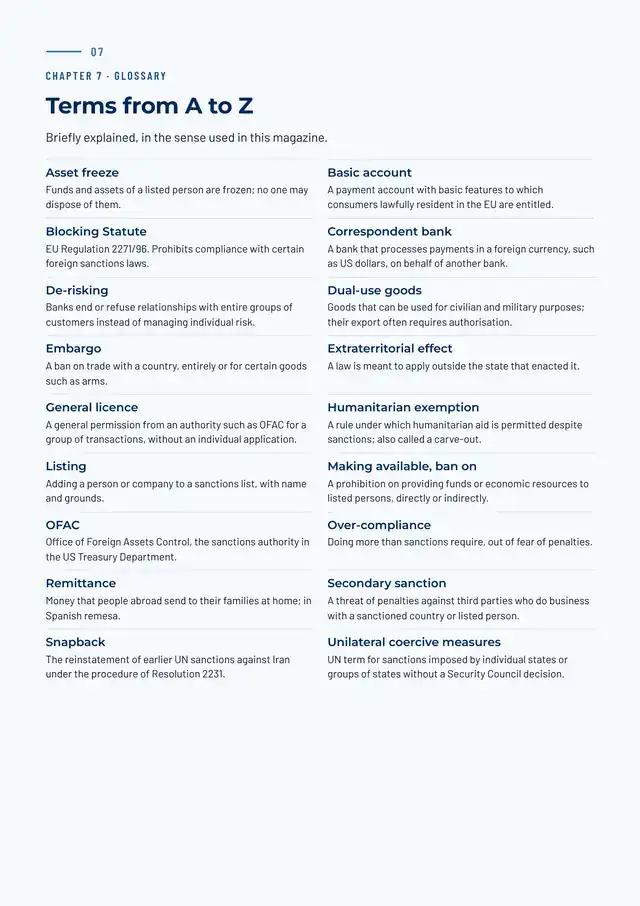
- Asset freeze
- Funds and assets of a listed person are frozen; no one may dispose of them.
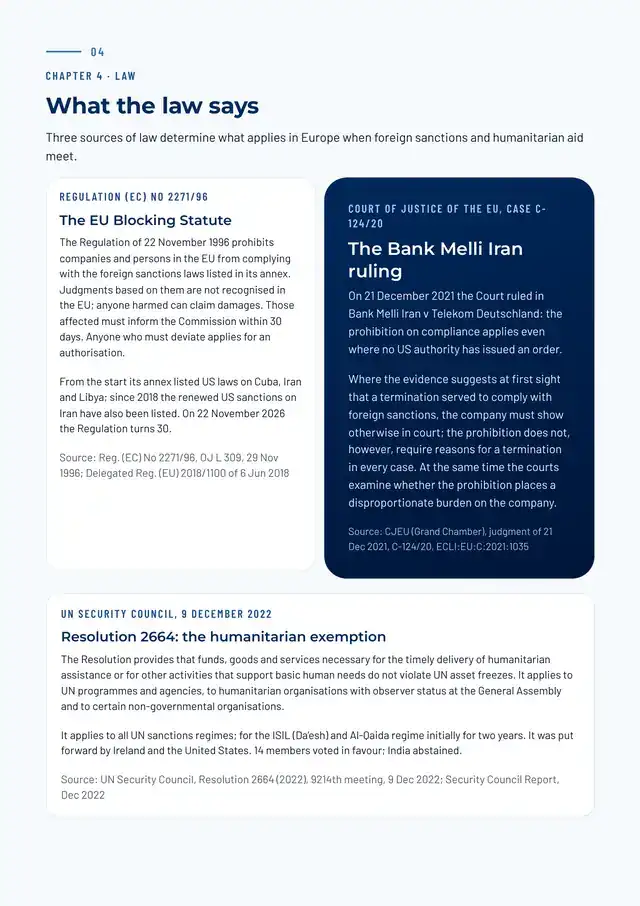
- Basic account
- A payment account with basic features to which consumers lawfully resident in the EU are entitled.
- Blocking Statute
- EU Regulation 2271/96. Prohibits compliance with certain foreign sanctions laws.
- Correspondent bank
- A bank that processes payments in a foreign currency, such as US dollars, on behalf of another bank.
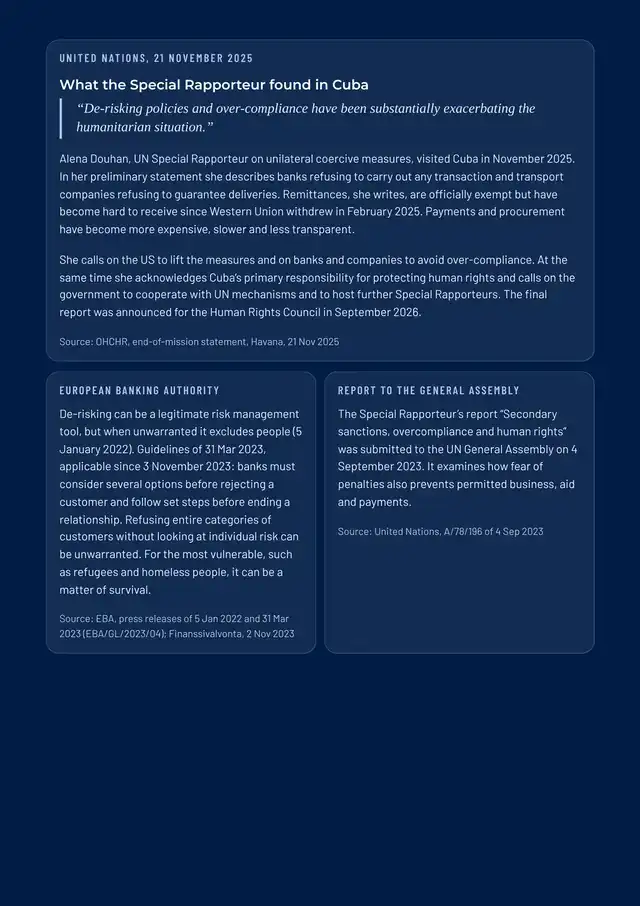
- De-risking
- Banks end or refuse relationships with entire groups of customers instead of managing individual risk.
- Dual-use goods
- Goods that can be used for civilian and military purposes; their export often requires authorisation.
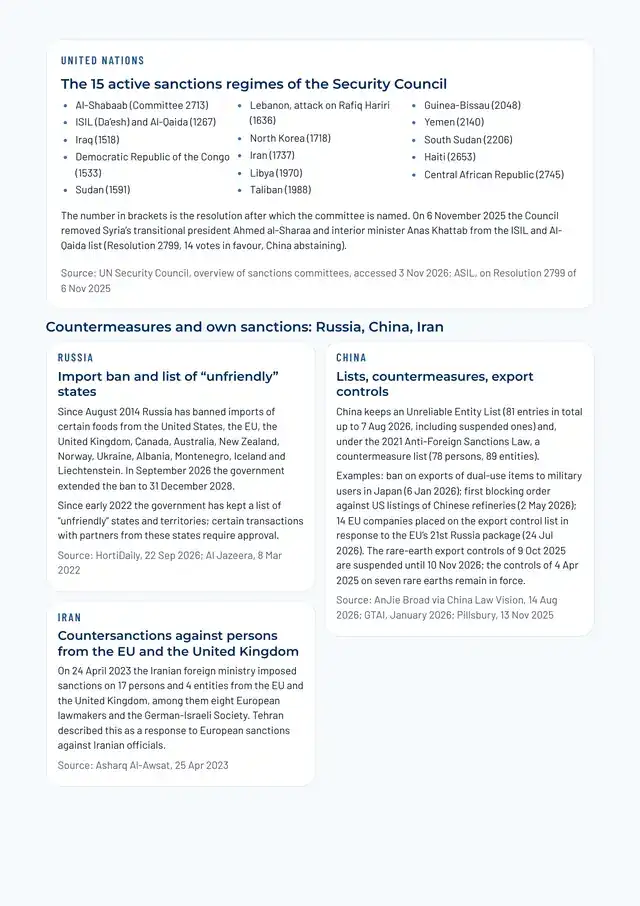
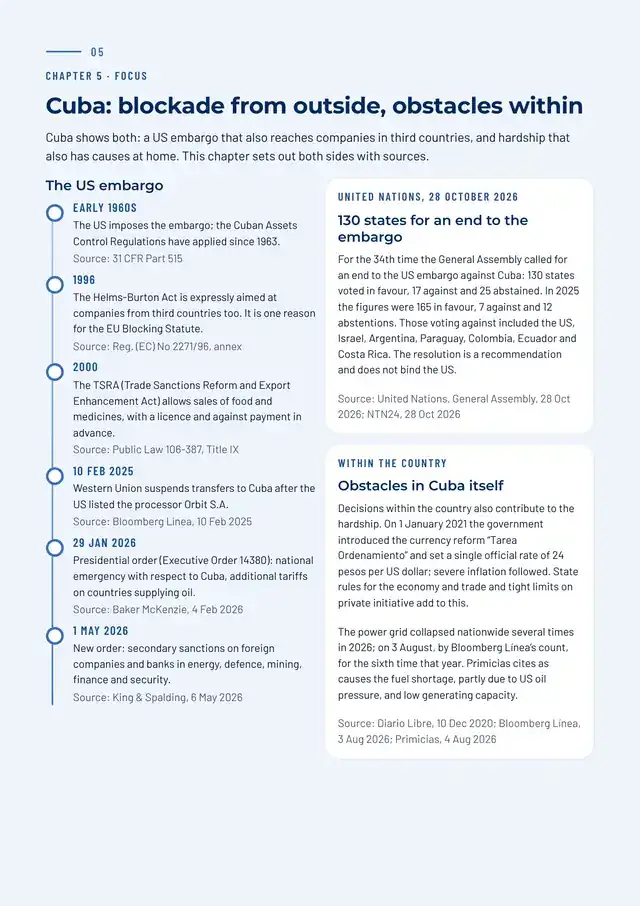
- Embargo
- A ban on trade with a country, entirely or for certain goods such as arms.
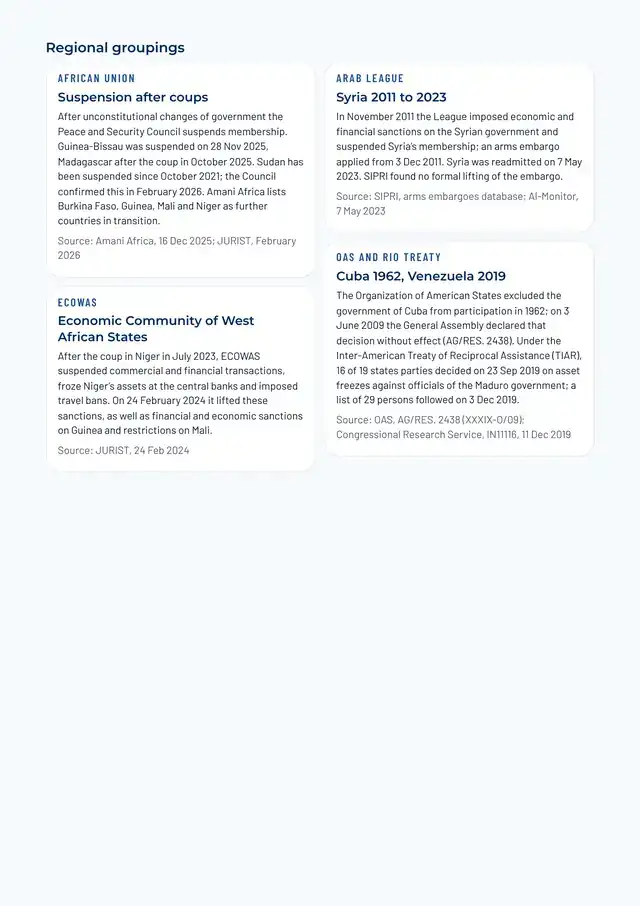
- Extraterritorial effect
- A law is meant to apply outside the state that enacted it.
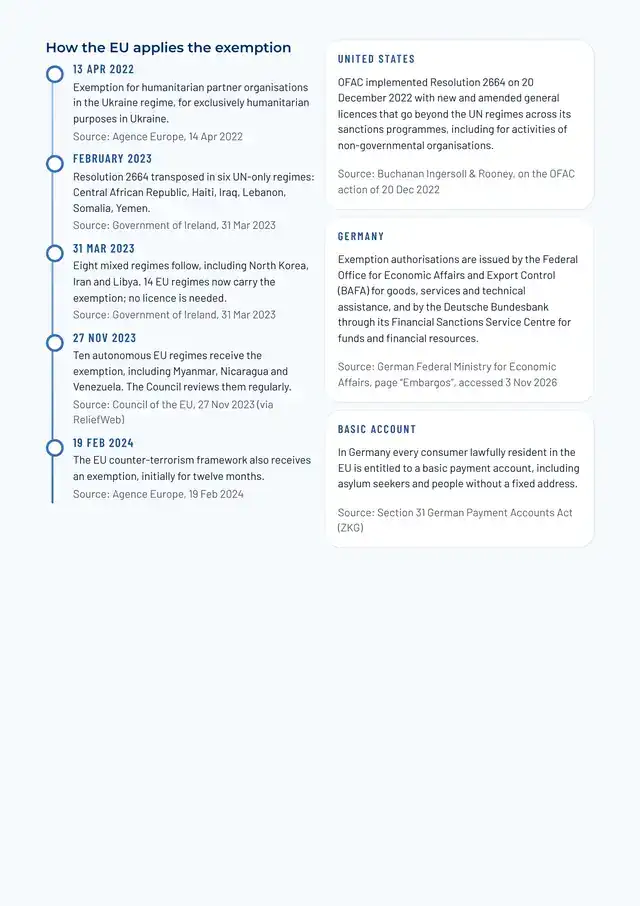
- General licence
- A general permission from an authority such as OFAC for a group of transactions, without an individual application.
- Humanitarian exemption
- A rule under which humanitarian aid is permitted despite sanctions; also called a carve-out.
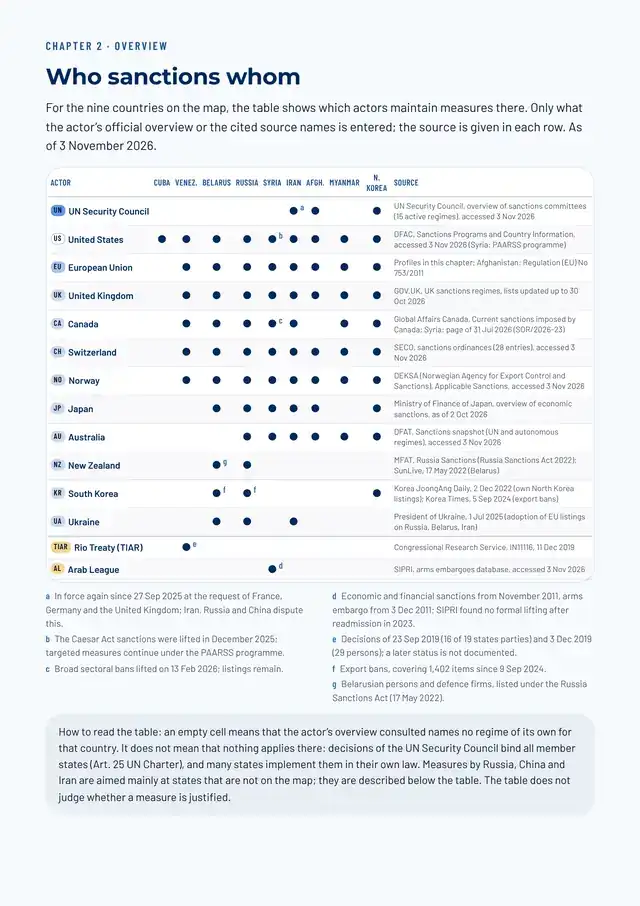
- Listing
- Adding a person or company to a sanctions list, with name and grounds.
- Making available, ban on
- A prohibition on providing funds or economic resources to listed persons, directly or indirectly.
- OFAC
- Office of Foreign Assets Control, the sanctions authority in the US Treasury Department.
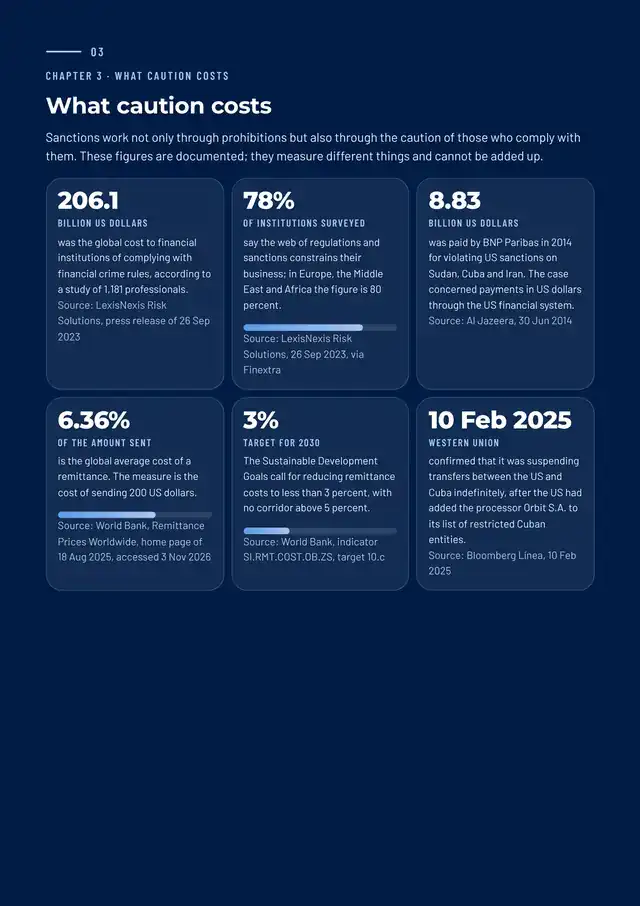
- Over-compliance
- Doing more than sanctions require, out of fear of penalties.
- Remittance
- Money that people abroad send to their families at home; in Spanish remesa.
- Secondary sanction
- A threat of penalties against third parties who do business with a sanctioned country or listed person.
- Snapback
- The reinstatement of earlier UN sanctions against Iran under the procedure of Resolution 2231.
- Unilateral coercive measures
- UN term for sanctions imposed by individual states or groups of states without a Security Council decision.